
Signs of Menopause at 43
Experiencing changes in your body at 43 can feel like navigating an unpredictable storm. While the average age for menopause is around 51, many women begin noticing significant shifts in their early 40s. These changes are often part of perimenopause, the transition phase leading up to the final period. At RISHITHA HOSPITALS, recognized as the Hospital in Bandlaguda, we understand that these symptoms—ranging from irregular cycles to sudden mood shifts—can be overwhelming. Our expert gynecologists specialize in women’s wellness, providing personalized care to help you manage this transition with confidence. Understanding these signs early is the first step toward maintaining your quality of life and long-term health as you enter this new chapter.
Understanding the "Change" at 43
At 43, you are in a prime age bracket for perimenopause. This isn’t a sudden “shut off” of your reproductive system; rather, it is a gradual decline in the hormones estrogen and progesterone.
Because your body is incredibly interconnected, these hormonal fluctuations don’t just affect your periods—they impact your brain, your bones, your heart, and even your skin. When menopause occurs before the age of 45, it is clinically termed “Early Menopause.” While 43 is quite common for symptoms to begin, it is important to track these signs to ensure they aren’t related to other health issues like thyroid dysfunction or nutritional deficiencies.
Common Signs and Symptoms
Every woman’s menopausal experience is different. Some might sail through with minor inconveniences, while others face “the perfect storm” of physical and emotional symptoms.
1. Menstrual Irregularities
The most classic sign is a change in your cycle. You might notice:
- Shorter Cycles: Periods coming every 21–24 days instead of 28.
- Heavier Flow: Flooding or needing to change products more frequently.
- Skipped Periods: Missing a month here and there as ovulation becomes sporadic.
2. Vasomotor Symptoms (Hot Flashes)
About 75% of women experience hot flashes. These feel like a sudden wave of heat spreading over the chest, neck, and face. If they happen at night, they are called night sweats, which often lead to chronic fatigue due to interrupted sleep.
3. Emotional and Cognitive Shifts
The “Brain Fog” is real. Lower estrogen can lead to:
- Irritability: Feeling “on edge” or having a shorter fuse than normal are signs of irritability.
- Anxiety: New or increased feelings of worry.
- Forgetfulness: Difficulty finding words or concentrating on tasks.
4. Physical Changes
- Vaginal Dryness: Thinner, drier tissues can make intimacy uncomfortable.
- Weight Gain: Specifically around the abdomen (the “menopause belly”).
- Breast Tenderness: Similar to what you might feel during pregnancy or early puberty.
- Skin and Hair: Skin may become drier or less elastic, and hair might thin.
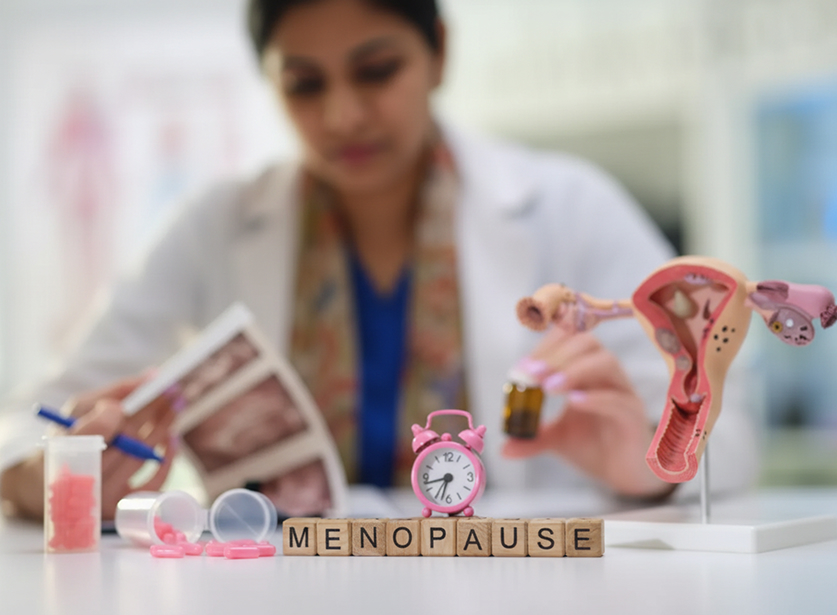
Why Seek Professional Guidance?
Managing menopause at 43 isn’t just about comfort; it’s about preventive health. Your body uses estrogen to protect itself. When it drops, your risk for certain conditions increases:
- Osteoporosis: Faster bone loss can lead to fractures.
- Heart Disease: Estrogen helps keep blood vessels flexible and cholesterol levels healthy.
At RISHITHA HOSPITAL, our comprehensive diagnostic approach includes hormone testing and bone density screenings to create a roadmap for your health. Whether it’s Hormone Replacement Therapy (HRT) or lifestyle modifications, expert guidance ensures you stay vibrant.
Frequently Asked Questions (FAQs)
- Is 43 too early to start menopause?
It is a bit earlier than the average age of 51, but it is not “abnormal.” Starting menopause between 40 and 45 is called Early Menopause. Many women begin the transition (perimenopause) in their early 40s.
- Can I still get pregnant if I have menopause symptoms?
Yes. As long as you are still having periods—even irregular ones—you are still ovulating occasionally. It is much harder to conceive, but pregnancy is still possible until you have gone 12 full months without a period.
- How do I know if it’s menopause or a thyroid problem?
The symptoms of a thyroid disorder (fatigue, weight gain, mood swings) overlap significantly with menopause. A simple blood test at a hospital can check your FSH (Follicle Stimulating Hormone) and TSH (Thyroid Stimulating Hormone) to give you a clear answer.
- What are the first signs I should look out for?
The “big three” are usually irregular periods, sudden hot flashes, and unexplained mood swings. If your cycle changes by 7 days or more consistently, your body is likely beginning the transition.
- How long do these symptoms last?
The duration of the perimenopause, or transition phase, can range from four to eight years. Once you reach actual menopause (no periods for a year), many symptoms like hot flashes begin to fade, though some, like vaginal dryness, may require ongoing management.
Navigating menopause at 43 requires a balance of self-care and professional medical support. By staying proactive and monitoring your symptoms, you can protect your heart and bone health for years to come. For residents in the locality, finding a trusted partner is essential. Rishitha Hospital stands out as the 24/7 emergency hospital in Bandlaguda offering specialized gynecological care and advanced diagnostics. Don’t let hormonal changes hold you back; expert help is just around the corner to ensure you thrive
Medical Disclaimer: This article is for general informational and educational purposes only and is not a substitute for professional medical advice, diagnosis, or treatment. Menopause symptoms vary widely between individuals. Always consult a qualified gynecologist or healthcare provider at Rishitha Hospitals regarding your specific symptoms, hormone changes, or treatment options such as HRT. Please seek in-person consultation before making any health-related decisions based on this information.