
Seasonal Illnesses in Children – How Rishitha Hospitals Keeps Kids Safe
Seasonal changes can affect children quickly. A sudden change in weather, school exposure, dust, pollution, mosquito breeding, outside food, and low immunity can make children more prone to fever, cough, cold, flu, stomach infections, allergies, skin rashes, and breathing problems. Most seasonal illnesses are mild, but parents should not ignore symptoms that continue, worsen, or affect a child’s breathing, eating, drinking, or activity levels.
For parents looking for the best pediatrician in Bandalguda, Rishitha Hospitals offers child-focused care for seasonal fever, cough, cold, stomach infections, respiratory concerns, allergies, and pediatric health issues. Consulting an experienced pediatrician helps parents understand the exact cause of symptoms, start the right treatment early, and prevent complications during seasonal illness outbreaks.
What Are the Most Common Seasonal Illnesses in Children?
The most common seasonal illnesses in children include cold, flu, viral fever, throat infection, cough, wheezing, asthma flare-ups, diarrhea, vomiting, dengue, malaria, skin rashes, and allergies. Parents should watch for high fever, breathing difficulty, repeated vomiting, dehydration, unusual sleepiness, poor feeding, or fever that does not reduce. Early pediatric consultation helps detect the cause and supports faster, safer recovery.
Why Do Children Fall Sick During Seasonal Changes?
Children fall sick more often during seasonal changes because their immune systems are still developing. They also spend time in schools, daycare centers, playgrounds, buses, and crowded places where infections can spread easily.
Weather changes can also increase dust, pollen, humidity, mosquito breeding, and viral activity. During monsoon, children may face stomach infections, dengue, malaria, and skin problems. During winter, cold, flu, cough, wheezing, and throat infections become more common. During summer, dehydration, stomach upset, heat-related tiredness, and foodborne infections can increase
Seasonal illness is not always serious. However, children can become weak faster than adults, especially when fever, vomiting, loose motions, cough, or breathing difficulty continues. That is why parents should focus on early symptoms, hydration, hygiene, nutrition, and timely medical care.
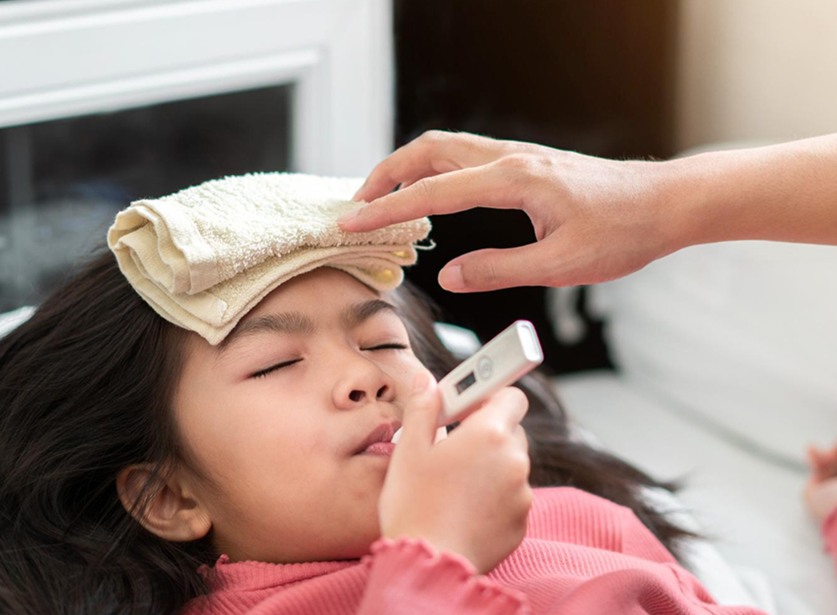
Common Seasonal Illnesses in Children
1. Cold and Flu
Cold and flu are among the most common infections in children. They spread through droplets when an infected person coughs, sneezes, talks, or touches shared surfaces. Children can easily catch these infections at school or while playing with other children.
Common symptoms include:
- Runny nose
- Sneezing
- Cough
- Sore throat
- Fever
- Headache
- Body pains
- Tiredness
- Reduced appetite
A common cold usually improves with rest, fluids, and supportive care. Flu may cause more body pain, high fever, weakness, and tiredness. Some children may also develop complications such as ear infection, sinus infection, dehydration, or worsening of asthma.
Parents should avoid giving antibiotics without a doctor’s advice. Most cold and flu infections are viral, and antibiotics do not work against viral infections. A pediatrician can examine the child and suggest the right treatment based on age, symptoms, temperature, and overall health.
2. Viral Fever
Viral fever is very common during seasonal changes. It can spread through close contact, contaminated surfaces, or exposure to infected people. Many children develop sudden fever with body pains, headache, weakness, throat irritation, cough, or stomach discomfort.
Parents should monitor:
- Temperature
- Fluid intake
- Urination
- Activity level
- Breathing pattern
- Appetite
- Sleepiness
A fever is the body’s response to infection, but it should be watched carefully. Do not panic if the temperature rises, but do not ignore warning signs.
Consult a pediatrician if:
- Fever lasts more than 2 to 3 days
- Fever is very high
- Child becomes dull or unusually sleepy
- Child refuses food and fluids
- Fever improves and comes back again
- Fever comes with rash, vomiting, loose motions, or breathing difficulty
A doctor may recommend tests if needed, especially during dengue, malaria, typhoid, flu, or viral outbreak seasons.
3. Cough, Wheezing, and Breathing Problems
Cold air, dust, pollution, pollen, viral infections, and sudden weather changes can trigger cough and wheezing in children. Children with asthma, allergies, or previous respiratory issues need extra care during seasonal changes.
Symptoms to watch include:
- Continuous cough
- Wheezing sound while breathing
- Fast breathing
- Chest tightness
- Difficulty sleeping due to cough
- Breathlessness while playing
- Repeated cough after cold or fever
Parents should never ignore breathing difficulty. If the child is breathing fast, pulling the chest inward while breathing, struggling to speak, looking very tired, or showing bluish lips, seek medical help immediately.
Repeated cough or wheezing may need proper evaluation. A pediatrician can check whether the child has allergies, asthma, infection, or another respiratory concern and guide parents on the right treatment plan.
4. Stomach Infections, Vomiting, and Diarrhea
Stomach infections often increase during monsoon and seasonal changes because of contaminated food, unsafe water, poor hand hygiene, and outside eating. Children can lose fluids quickly through vomiting and loose motions, so parents should act early.
Common symptoms include:
- Loose motions
- Vomiting
- Stomach pain
- Fever
- Weakness
- Dry lips or mouth
- Reduced urination
- Crying without tears
- Sunken eyes
Hydration is the most important step. Give small sips of water, ORS, rice water, coconut water, or fluids suggested by the doctor. Avoid sugary drinks, packaged juices, and self-medication.
Visit a pediatrician immediately if the child has blood in stool, repeated vomiting, severe abdominal pain, no urine for several hours, extreme tiredness, or signs of dehydration.
5. Dengue, Malaria, and Mosquito-Borne Illnesses
Mosquito-borne illnesses can affect children during monsoon and post-monsoon periods. Dengue, malaria, and chikungunya can begin like a simple fever but may need close monitoring.
Possible symptoms include:
- High fever
- Severe body pains
- Headache
- Pain behind the eyes
- Vomiting
- Skin rash
- Weakness
- Reduced appetite
- Bleeding from nose or gums in severe cases
Parents should not give random painkillers during suspected dengue. Some medicines may increase the risk of bleeding. A pediatrician may advise blood tests, platelet monitoring, hydration, and follow-up depending on the child’s condition.
To reduce mosquito-borne illnesses:
- Do not allow water to stagnate
- Use mosquito nets or window screens
- Dress children in full sleeves during mosquito-heavy seasons
- Keep surroundings clean
- Use child-safe mosquito protection methods
- Empty water from buckets, plant trays, coolers, and containers
Prevention plays a major role in protecting children during mosquito season.
6. Skin Rashes, Fungal Infections, and Allergies
Seasonal humidity, sweating, dry weather, dust, pollen, and insect bites can cause skin problems in children. Some rashes are mild, while others may need treatment.
Common skin symptoms include:
- Itching
- Red patches
- Dry skin
- Fungal patches
- Boils
- Insect bite reactions
- Sweating-related irritation
- Allergy-related rashes
Parents should keep the child’s skin clean and dry, change sweaty clothes, avoid harsh soaps, and avoid applying random creams without medical advice. If the rash spreads, becomes painful, forms pus, or comes with fever, consult a pediatrician.
7. Throat Infections and Ear Infections
Children may complain of throat pain, difficulty swallowing, ear pain, blocked ears, or irritability after a cold. Some throat infections are viral, while some may be bacterial. Ear infections are also common after repeated cold and nasal congestion.
Symptoms include:
- Throat pain
- Fever
- Cough
- Ear pain
- Child pulling the ear
- Reduced hearing
- Irritability
- Poor sleep
A pediatrician can examine the throat and ear to check whether the child needs supportive care, medicines, or further treatment. Early care helps prevent repeated discomfort and complications.
How Parents Can Prevent Seasonal Illnesses in Children
Prevention starts at home. Simple daily habits can reduce infection risk and help children recover faster.
Encourage Proper Handwashing
Handwashing is one of the easiest ways to prevent infections. Teach children to wash hands:
- Before eating
- After using the toilet
- After playing outside
- After coughing or sneezing
- After touching pets
- After coming home from school
- Before touching the face
Make handwashing a regular habit. Children follow routines better when parents practice them too.
Keep Children Hydrated
Children may drink less water during cooler months or lose fluids during fever, vomiting, and diarrhea. Offer water, soups, ORS when advised, coconut water, fruits, and homemade fluids. Hydration supports energy, digestion, circulation, and recovery.
If your child has loose motions or vomiting, give small amounts of fluid frequently instead of forcing large quantities at once.
Give Balanced Meals
Good nutrition supports immunity. Include dal, rice, roti, vegetables, fruits, eggs, paneer, curd, nuts, and seasonal foods in your child’s diet. Avoid too many fried snacks, sugary foods, packaged drinks, and outside food, especially when the child is recovering.
A balanced plate should include:
- Protein for growth and repair
- Fruits and vegetables for vitamins
- Whole grains for energy
- Curd or milk for calcium
- Fluids for hydration
Small, frequent meals work better when children have low appetite during illness.
Maintain Sleep and Rest
Children need proper sleep for growth, immunity, learning, and recovery. During illness, allow enough rest and avoid sending the child to school too early.
A child who still has fever, severe cough, vomiting, loose motions, or weakness should recover at home and return to school after medical advice. Rest also prevents spreading infection to other children.
Avoid Self-Medication
Do not give antibiotics, cough syrups, adult medicines, leftover prescriptions, or strong painkillers without consulting a doctor. Children need medicines based on age, weight, symptoms, and diagnosis.
Wrong medication can delay recovery, cause side effects, or hide important symptoms. Always follow a pediatrician’s advice for dosage and duration.
Keep Vaccinations Updated
Vaccination helps protect children from many serious infections. Parents should follow the recommended immunization schedule and consult a pediatrician for missed vaccines, seasonal vaccines, or travel-related vaccination advice.
Vaccination does not prevent every seasonal illness, but it reduces the risk of many preventable diseases and complications.
When Should Parents Take a Child to a Pediatrician?
Parents should consult a pediatrician when symptoms are severe, persistent, or unusual. Early consultation gives clarity and prevents complications.
Visit a pediatrician if your child has:
- Fever lasting more than 2 to 3 days
- Fever in a baby below 3 months
- Breathing difficulty
- Wheezing
- Repeated vomiting
- Loose motions with dehydration
- Severe stomach pain
- Skin rash with fever
- Extreme weakness
- Poor feeding
- No urine for several hours
- Seizures
- Blue lips or face
- Fever that improves and returns again
Do not wait for symptoms to become serious. Children can become dehydrated, weak, or breathless faster than adults.
How Rishitha Hospitals Helps Keep Children Safe
Rishitha Hospitals supports families with pediatric consultations, fever evaluation, seasonal illness care, respiratory care, stomach infection support, allergy guidance, child health checkups, and emergency care when needed.
The pediatric team focuses on identifying the cause of illness, treating symptoms safely, guiding parents on home care, and preventing complications. Whether your child has fever, cough, cold, wheezing, vomiting, diarrhea, skin rash, or repeated infections, timely care can make recovery smoother.
Parents in and around Bandalguda can visit Rishitha Hospitals for child-friendly care and clear medical guidance during every season.
Keep Your Child Safe in Every Season
Seasonal illnesses are common in children, but timely care can prevent complications. Watch symptoms closely, keep your child hydrated, maintain hygiene, avoid self-medication, and consult a pediatrician when symptoms continue or worsen.
For fever, cough, cold, stomach infection, allergies, breathing issues, or seasonal child health concerns, book an appointment with the pediatric department at Rishitha Hospitals, Bandalguda, Hyderabad.