
Foot Fungal Infections in Monsoon
The rain finally breaks the summer heat — and almost on cue, so does the itching between your toes. Every monsoon, dermatology OPDs across Hyderabad see a sharp uptick in foot-related fungal complaints, from mild itching to painful, cracked skin that just won’t heal. It’s one of the most common — and most avoidable — seasonal health issues, affecting children, working professionals, and elderly patients alike.
This guide breaks down why monsoon is peak season for foot fungal infections, how to tell a mild case from one that needs medical attention, and what actually works to treat and prevent it. If symptoms are already bothering you, the Dermatology department at Rishitha Hospitals in Bandlaguda Jagir can help you get a proper diagnosis rather than guessing with random creams.
Why Monsoon Is Prime Time for Foot Fungal Infections
The Science Behind It
Fungi that cause skin infections thrive in warm, damp, low-light conditions — exactly what monsoon weather creates. Increased humidity keeps skin moist for longer, and sweat that doesn’t evaporate properly (especially inside closed shoes) creates the ideal breeding ground for fungal overgrowth.
Common Monsoon Triggers
- Wearing wet or damp shoes and socks for extended hours (commutes, offices, schools)
- Walking through puddles or waterlogged streets barefoot or in open footwear
- Sharing socks, towels, or footwear with an infected person
- Poor drying of feet after a shower or after getting caught in the rain
- Reduced ventilation indoors, which raises ambient humidity
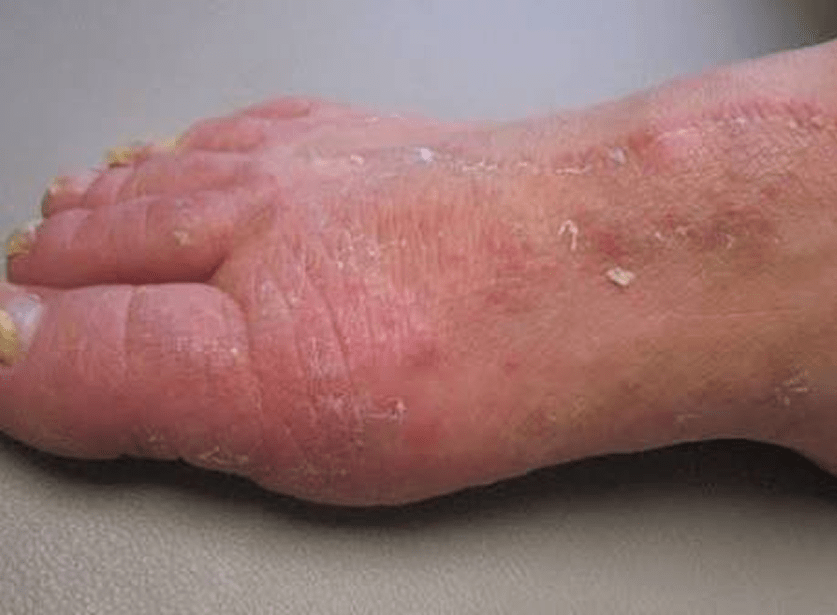
Types of Foot Fungal Infections You Should Know
Athlete's Foot (Tinea Pedis)
The most common monsoon foot infection, affecting the skin between the toes and soles.
Key symptoms: itching, burning, peeling or flaking skin, occasional cracking between toes.
Nail Fungus (Onychomycosis)
Affects the toenails, often developing after prolonged nail exposure to moisture.
Key symptoms: thickened, discoloured (yellow-brown), brittle, or crumbling nails.
Ringworm on the Foot (Tinea Corporis/Pedis)
A contagious infection causing ring-shaped patches, sometimes spreading from the feet to other body parts.
Key symptoms: circular, red, scaly rash with a clearer centre; mild to moderate itching.
Symptoms: Mild vs. Advanced Warning Signs
If you had to remember just one clue each: severe body pain + rash → think dengue; cough/cold + fatigue → think viral; slow-rising fever + stomach trouble → think typhoid. But overlap is common enough that a lab test, not symptom-spotting, should confirm the diagnosis.
How Doctors Confirm the Diagnosis
Early Signs
Mild itching between the toes, slight redness, dry or flaky patches, faint odour — easy to dismiss as “just monsoon skin.”
Advanced Warning Signs
Cracked or bleeding skin, oozing or pus, strong foul odour, visibly thickened or lifted nails, and rash spreading beyond the feet. These signal it’s time to stop self-treating and see a doctor.
Who's Most at Risk? Age and Lifestyle-Specific Guidance
Most monsoon health content treats every reader the same way — but risk and urgency genuinely differ by age and routine.
Children
Frequent barefoot play in puddles and shared school changing areas make children prone to ringworm and athlete’s foot. Keeping a spare pair of dry socks and encouraging thorough foot-drying after outdoor play goes a long way.
Working Professionals & Daily Commuters
Closed formal shoes worn for 8–10 hours, combined with rain-soaked commutes, trap moisture all day — a near-perfect setup for athlete’s foot. Carrying a spare pair of socks and rotating footwear helps break the cycle.
Elderly and Diabetic Individuals
This is the group that needs the most caution. Reduced circulation, slower wound healing, and nerve sensitivity changes mean a “minor” fungal infection can progress to a secondary bacterial infection or a non-healing wound. Any foot infection in a diabetic patient deserves prompt medical evaluation, not home remedies.
What NOT to Do When You Suspect a Foot Fungal Infection
- Don’t soak feet in hot water — warmth and moisture actually help fungi multiply faster; lukewarm water is safer.
- Don’t use leftover steroid-antifungal combination creams without guidance — steroids can suppress symptoms while letting the infection spread underneath.
- Don’t stop treatment as soon as itching disappears — visible improvement doesn’t mean the fungus is gone; stopping early is the single biggest reason infections come back.
- Don’t share footwear, socks, or towels, even within the family, once an infection is suspected.
- Don’t ignore it if you’re diabetic or elderly — what looks minor can escalate quickly in this group.
How Doctors Diagnose Foot Fungal Infections
Diagnosis usually starts with a straightforward clinical examination of the affected skin or nail. In cases that are unclear, recurrent, or not responding to over-the-counter treatment, a simple skin/nail scraping may be examined under a microscope (KOH test) to confirm the fungal species and rule out other causes like bacterial infection or eczema — which can look similar but need very different treatment.
Treatment Options That Actually Work
Topical Antifungal Treatment
Most mild-to-moderate cases respond well to topical antifungal creams or powders, typically applied for a doctor-recommended duration even after symptoms improve.
Oral Antifungal Treatment for Persistent Cases
Nail infections and stubborn or widespread skin infections often need oral antifungal medication, prescribed and monitored by a doctor — these courses run longer than skin creams and require follow-up.
Why Finishing the Full Course Matters
Fungal infections are notorious for recurring, and incomplete treatment is the leading reason why. Completing the full course — even after symptoms disappear — is what actually clears the infection instead of just suppressing it temporarily.
Prevention: Monsoon-Proofing Your Feet
Daily Hygiene Habits
Wash and thoroughly dry feet — especially between the toes — every time they get wet. Trim nails regularly to reduce spaces where moisture and debris collect.
Smart Footwear & Sock Choices
Choose breathable, moisture-wicking socks and rotate at least two pairs of shoes so each gets time to fully dry. Avoid tight, non-breathable synthetic footwear for long stretches.
Home and Environment Care
Keep bathrooms and shoe racks well-ventilated, and avoid walking barefoot on damp bathroom floors or shared wet surfaces like gym showers or pool decks.
When to See a Doctor
Book a consultation if you notice:
- Symptoms lasting more than 1–2 weeks despite basic hygiene care
- Spreading redness, swelling, or pus
- Fever alongside a foot infection
- Any foot infection if you’re diabetic or have poor circulation
- Recurrent infections despite completing prior treatment
Why Rishitha Hospitals Is the Right Choice for Foot Fungal Infection Treatment in Bandlaguda
If monsoon has left your feet itchy, cracked, or simply not improving with home care, it’s worth getting an accurate diagnosis rather than cycling through creams. As a trusted multispeciality hospital in Bandlaguda Jagir, Rishitha Hospitals’ Dermatology team evaluates foot fungal infections properly — distinguishing them from bacterial infections, eczema, or diabetic foot complications before recommending treatment. For patients searching for the best hospital in Bandlaguda for reliable, transparent skin and foot care, our dermatology consultations are designed to treat the cause, not just mask the symptom.
Don’t let a monsoon foot infection linger. Contact our team at Rishitha Hospitals today.
📞 040 2970 8086 / 040 3502 6746 📍 Chilkur Balaji Temple Rd, Bandlaguda Jagir, Hyderabad, Telangana 500086 🔗 Book a dermatology consultation: rishithahospitals.com/contact-rishitha-hospitals
Frequently Asked Questions
- Can foot fungal infections spread to other people? Yes. They can spread through shared footwear, towels, or damp surfaces like bathroom floors and locker rooms.
- Is it safe to use home remedies for foot fungus? Mild cases sometimes improve with good hygiene, but home remedies alone can’t cure a confirmed fungal infection — a doctor’s evaluation ensures you’re treating the right condition.
- Why does my foot fungal infection keep coming back? The most common reason is stopping treatment as soon as symptoms fade, before the fungus is fully cleared.
- Are diabetics more at risk from foot fungal infections? Yes. Reduced circulation and slower healing mean infections can progress faster and lead to complications, so prompt treatment is important.
- When should I stop self-treating and see a doctor? If symptoms last beyond 1–2 weeks, spread, ooze, or you have diabetes or fever alongside the infection, it’s time for a professional evaluation.
Medical Disclaimer : This article is intended for general informational purposes only and does not constitute medical advice, diagnosis, or treatment. Foot fungal infections can resemble other skin or circulatory conditions, and self-diagnosis is not a substitute for professional evaluation. Please consult a qualified dermatologist or physician at Rishitha Hospitals or another healthcare provider for any concerns regarding your specific symptoms or condition, especially if you are diabetic, elderly, or immunocompromised.