
Introduction
The landscape of modern medicine is shifting from merely managing symptoms to actively harnessing the body’s innate ability to heal itself. For individuals battling chronic knee pain, this shift is personified by Platelet-Rich Plasma (PRP) therapy. Often referred to as “liquid gold,” PRP is revolutionising how we approach degenerative conditions like osteoarthritis and sports-related ligament injuries. In the bustling healthcare hub of Hyderabad, seeking advanced care has become more accessible, with premier orthopaedic hospitals in Bandlaguda leading the way in regenerative techniques. At the forefront of this movement is Rishitha Hospitals, where a blend of surgical excellence and cutting-edge biological therapies offers a lifeline to those looking to avoid or delay invasive surgery.
Understanding the Biological Powerhouse: What is PRP?
To appreciate why PRP is so effective for knee health, one must first understand the “Platelet” in Platelet-Rich Plasma. While platelets are best known for their role in blood clotting, they are also biological reservoirs of growth factors. These factors, including PDGF (Platelet-Derived Growth Factor) and VEGF (Vascular Endothelial Growth Factor), act as signalling molecules that instruct the body to repair damaged tissue, reduce inflammation, and stimulate collagen production.
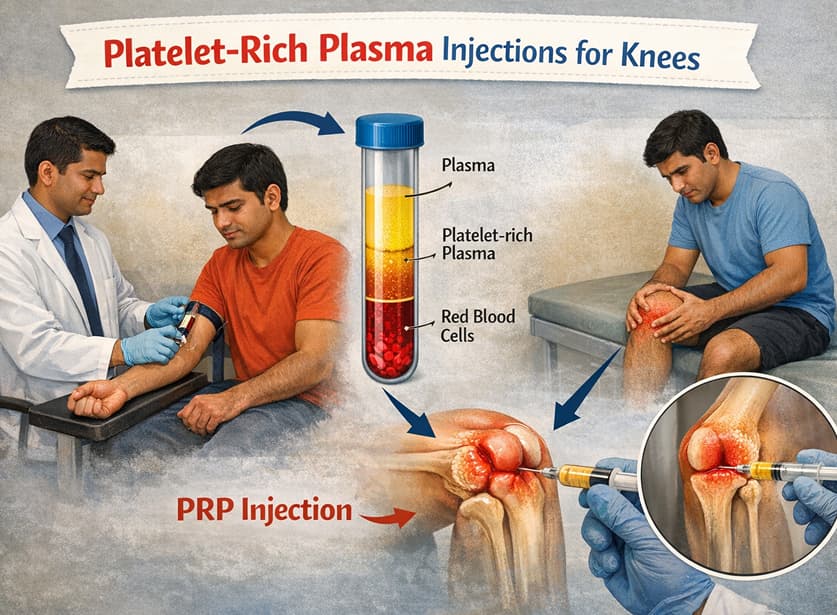
A PRP injection is a concentrated dose of these healing agents. By taking a small sample of your own blood and processing it to isolate the platelets, clinicians can create a solution that has up to five to ten times the concentration of growth factors found in normal blood. When this “concentrated healing” is injected into a knee joint suffering from wear and tear, it creates a localised environment optimised for tissue repair.
Why PRP is the Preferred Choice at Orthopaedic Hospitals in Bandlaguda
Patients visiting orthopaedic hospitals in Bandlaguda are increasingly opting for PRP over traditional treatments like corticosteroids for several reasons. Unlike steroid injections, which temporarily mask pain by suppressing the immune response and can sometimes lead to cartilage degradation over time, PRP aims to improve the underlying health of the joint.
At Rishitha Hospitals, the focus is on a patient-centric, holistic recovery. PRP fits perfectly into this philosophy because:
- It is Autologous: Since the plasma comes from your own body, there is virtually zero risk of allergic reaction or rejection.
- Minimally Invasive: The entire procedure is performed in an outpatient setting, often taking less than an hour.
- Sustained Relief: Research shows that while steroids provide faster initial relief, the benefits of PRP peak around 3–6 months and can last up to a year or more.
The Science of Knee Restoration: How PRP Works Internally
The knee is a complex hinge joint reliant on smooth cartilage and robust ligaments. In cases of Osteoarthritis (OA), the cartilage that cushions the bones begins to thin and fray. This leads to a cycle of inflammation and pain.
When PRP enters the knee capsule, it performs three primary functions:
- Inflammation Modulation: It inhibits the inflammatory proteins that cause pain and swelling.
- Chondrocyte Stimulation: It encourages the cells that produce cartilage (chondrocytes) to stay active and healthy.
Hyaluronic Acid Production: It may stimulate the synovial lining of the joint to produce more natural lubricant, improving joint “glide.”
The PRP Procedure: What to Expect During Your Visit
If you are considering this treatment, understanding the step-by-step process can alleviate any anxiety. At specialised centres like Rishitha Hospitals, the process is streamlined and sterile:
- Blood Collection: A small amount of blood (typically 30-60mL) is drawn from your arm, much like a routine blood test.
- The Centrifuge Cycle: The blood is placed in a high-speed centrifuge. This machine spins the sample to separate the red blood cells from the plasma and platelets.
- Extraction: The “platelet-rich” portion of the plasma is carefully extracted into a syringe.
- The Injection: Using ultrasound guidance to ensure maximum precision, the specialist injects the PRP directly into the damaged area of the knee joint.
- Recovery: You can typically walk out of the clinic immediately after the procedure.
Who is the Ideal Candidate for PRP?
While PRP is a powerful tool, it is most effective when used at the right time. Clinical data suggest that patients with Grade I, II, or III Osteoarthritis (early to moderate stages) see the most significant improvements. In these stages, there is still enough viable tissue for the growth factors to act upon.
For those with “bone-on-bone” (Grade IV) arthritis, PRP may still offer some symptomatic relief, but it is often used as a supportive therapy alongside other treatments. Athletes with “Jumper’s Knee” (patellar tendonitis) or meniscus tears also report high success rates, as PRP accelerates the healing of these notoriously slow-to-repair tissues.
Recovery and Long-term Outcomes
The beauty of PRP is that it doesn’t require a gruelling rehabilitation period. However, “rest” is a relative term. For the first 48 hours, patients are usually advised to avoid heavy weight-bearing activities. Over the following weeks, as the growth factors begin their work, a gradual return to activity—supported by physical therapy—is encouraged.
Many patients report a “turning point” around the 4-to-6-week mark, where stiffness decreases and the range of motion improves significantly. Unlike a “quick fix,” the goal of PRP is long-term joint preservation. By improving the biological health of the knee, many patients can return to activities they once thought were lost to them, such as morning walks, gardening, or even low-impact sports.
Final Thought
Platelet-Rich Plasma therapy represents a significant milestone in regenerative orthopaedics. By leveraging your body’s own healing potential, PRP offers a safe, effective, and minimally invasive alternative to traditional pain management. For those seeking expert care, visiting a reputable facility can make all the difference in your recovery journey. Don’t let knee pain dictate your lifestyle—explore how biological therapies can restore your mobility and help you rediscover an active, pain-free life today.
Frequently Asked Questions (FAQ)
- Is the PRP injection painful? The procedure involves a standard needle stick for the blood draw and a second injection into the knee. Most patients describe the sensation as a pressure or a dull ache rather than sharp pain. Local anaesthesia is often used at the injection site to minimise discomfort.
- How many PRP injections will I need for my knee? While some patients feel relief after a single session, most clinical protocols recommend a series of 2 to 3 injections spaced 2 to 4 weeks apart. Your orthopaedic specialist will customise a plan based on the severity of your condition.
- Are there any side effects to PRP therapy? Because PRP uses your own blood, the risk of a major adverse reaction is extremely low. The most common side effects are temporary “flare-ups” of pain or swelling in the joint for 24–48 hours post-injection as the inflammatory healing process begins.
- Can I drive home after a PRP injection? In most cases, yes. However, if you are experiencing significant pain or have a long commute, it is often recommended to have someone accompany you. If the right knee is injected, driving may be slightly uncomfortable for a few hours.
- How long does it take for PRP to start working? PRP is not an instant painkiller. It works by repairing tissue, which takes time. Most patients start to notice a significant reduction in pain and improved function between 4 and 6 weeks after the initial injection, with benefits continuing to increase for several months.