
Clogged ears can be caused by earwax buildup, trapped water, colds or allergies, or air pressure changes from flying. Safe methods to unclog them include softening earwax with oil drops, gently tugging the earlobe to release trapped water, yawning or chewing gum to relieve pressure, and steam inhalation for congestion. Persistent or painful blockage needs medical attention.
How to Unclog Ears: A Doctor-Informed Guide to Safe Relief at Every Age
That muffled, underwater, “full” feeling in your ear is hard to ignore. It changes how you hear, how you focus, and even how you sleep. The instinct is to reach for a cotton bud and dig — but that is exactly how most ear blockages get worse.
Here is the single most useful thing to understand: a clogged ear is a symptom, not a diagnosis. Earwax, a head cold, water after a swim, and pressure from a flight all create the same blocked sensation, but each one needs a different fix. Use the wrong remedy and nothing happens. Use the right one and relief often comes within minutes.
This guide from the ENT team at Rishitha Hospitals walks you through how to identify why your ear is clogged, the safe ways to clear it at home for every age group, what you should never do, and the warning signs that mean it is time to see a specialist.
Why Do Ears Get Clogged?
Your ear is a finely tuned system. When any part of that system is blocked, swollen, or out of pressure balance, you feel it instantly. These are the most common causes.
Earwax (Cerumen) Buildup
Earwax is not dirt — it is your ear’s natural defence, with antibacterial and antifungal properties that trap dust and protect the eardrum. Normally it migrates out on its own. But some people produce wax faster than it clears, and pushing cotton buds in compacts it against the eardrum, creating a firm plug.
Colds, Allergies, and Sinus Congestion
Your middle ear connects to the back of your throat through a narrow passage called the Eustachian tube, which keeps air pressure balanced on both sides of the eardrum. When a cold, sinus infection, or allergy inflames that tube, it cannot open properly. Pressure and fluid build up, and the ear feels stuffed. Doctors call this Eustachian tube dysfunction (ETD) — and it is the single most common reason ears feel clogged.
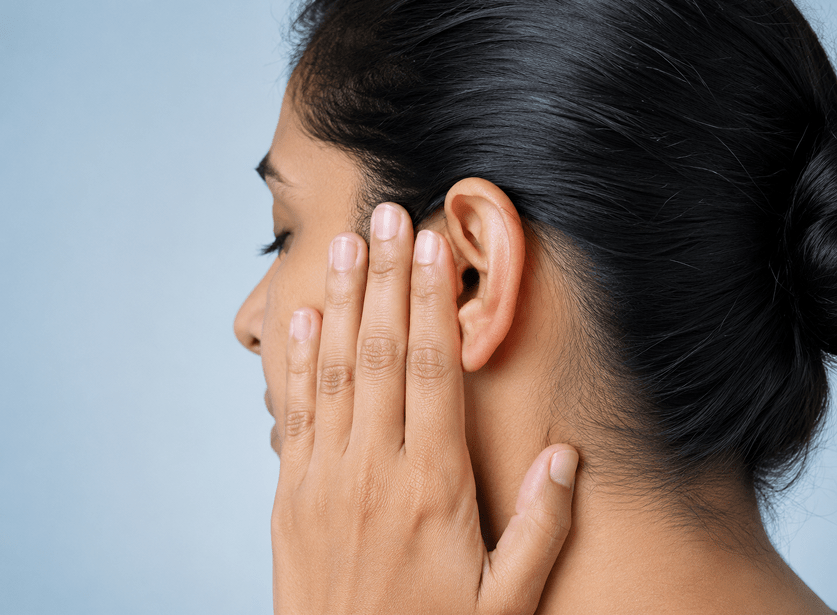
Water Trapped After Swimming or Bathing
Water can sit in the ear canal and create a plugged feeling, sometimes with a sloshing sound. Left too long, trapped moisture can lead to “swimmer’s ear,” an infection of the outer canal.
Altitude and Air Pressure Changes
Flying, driving through hills, or scuba diving forces rapid pressure changes the Eustachian tube cannot always keep up with — leaving the ear blocked for minutes or, occasionally, days.
Ear Infections
Middle or outer ear infections cause congestion alongside pain, and sometimes fever or discharge. These usually need medical treatment rather than home remedies.
First, Identify the Cause Before You Treat It
This is the step almost everyone skips. Spend thirty seconds matching your situation to the right column — it determines what actually works.
- It came on slowly, hearing is muffled, no pain, no recent cold → likely earwax.
- It started with a cold, allergy flare, or sinus pressure; ears feel full and “pop” → likely Eustachian tube dysfunction.
- It happened right after swimming or a shower; you feel water moving → trapped water.
- It began during a flight or descent from altitude → pressure imbalance.
- There is pain, fever, dizziness, or fluid draining out → possible infection — see a doctor rather than self-treating.
Now match the cause to the method below.
How to Unclog Ears Caused by Earwax
The goal is to soften the wax so it works its way out naturally — never to scrape it out.
Step 1: Soften it. Lie on your side and place a few drops of room-temperature mineral oil, baby oil, glycerine, or plain olive oil into the affected ear. A diluted hydrogen peroxide solution (mixed with an equal part of warm water) also works. Stay still for five to ten minutes.
Step 2: Rinse gently. After a day or two of softening, use a rubber-bulb syringe to squirt body-temperature water into the canal. Cool or hot water can cause dizziness. Tilt your head and, for adults, gently pull the outer ear up and back to straighten the canal. Let the water drain out.
Step 3: Dry the ear. Pat the outer ear with a towel.
You may need to repeat this over a few days. Pharmacy earwax-removal kits can also help mild buildup. Important: do not use drops or irrigation if you have an ear infection, a known hole in your eardrum, or ear tubes — see a professional instead.
How to Unclog Ears Caused by Pressure or Congestion
When the culprit is a cold, allergy, or sinus pressure, the aim is to coax the Eustachian tube open.
- Swallow, yawn, or chew gum. These movements activate the muscles that open the tube — the simplest fix of all.
- Try a gentle Valsalva manoeuvre. Pinch your nostrils shut, close your mouth, and blow softly, as if blowing your nose. You may feel a satisfying “pop.” Blow gently — force can harm the eardrum.
- Apply a warm compress. A cloth soaked in warm water, held over the ear for five to ten minutes, eases pressure and discomfort from congestion.
- Inhale steam. Leaning over a bowl of hot water with a towel over your head for ten to fifteen minutes loosens sinus congestion.
- Clear the nose. A saline nasal spray or rinse keeps the passages open. For allergy-driven blockage, a doctor may recommend a steroid nasal spray or antihistamine.
A short course (no more than three days) of an over-the-counter decongestant can help adults, but these are not suitable for young children — check with a doctor first.
How to Unclog Ears From Trapped Water
- Tilt your head sideways and gently tug the earlobe to let gravity pull the water out.
- Lie on your side for a few minutes with the affected ear down.
- A hair dryer on its lowest, coolest setting, held a comfortable distance away, can evaporate residual moisture.
Resist the urge to insert anything into the canal. If a blocked, itchy, or painful ear persists for more than a day after swimming, it may be the start of an infection.
How to Unclog Ears While Flying or at Altitude
Pressure-related blockage is largely preventable:
- Yawn and swallow during take-off and descent.
- Suck on a sweet or chew gum to keep swallowing.
- Use the gentle Valsalva manoeuvre repeatedly, especially while landing.
- Use a saline or decongestant nasal spray about half an hour before take-off and landing if you are congested.
- Avoid flying with a heavy cold or sinus infection where possible.
Clearing Clogged Ears in Babies and Children
Children get clogged ears far more often than adults — their Eustachian tubes are shorter and more horizontal, and enlarged adenoids can block them. Because little ears are delicate, the rules are stricter:
- Never put cotton buds, drops, or syringes into a child’s ear without a doctor’s guidance.
- During flights, give a baby a bottle or pacifier to suck on, and let toddlers drink from a cup. Children over four can chew gum or blow bubbles through a straw.
- Skip decongestants in young children — they are not recommended.
- If your child has ear pain, fever, tugging at the ear, fluid drainage, or trouble hearing, see a doctor. Persistent fluid sometimes needs treatment, and recurrent cases may need a minor procedure to place ear tubes.
Clearing Clogged Ears in Older Adults
Adults who wear hearing aids or deep earplugs are more prone to wax buildup, because the devices slow the ear’s natural self-cleaning. Keep devices clean, limit how long they sit in the ear, and have wax checked regularly. For older adults, sudden muffled hearing should never be brushed off as “just wax” — it deserves a proper examination.
What You Should Never Do
These popular “hacks” cause real harm:
- Cotton buds (Q-tips): push more wax in than they remove and can tear the canal or eardrum.
- Ear candling: burns the skin and face, drips hot wax into the ear, and has no proven benefit.
- Paper clips, hairpins, or keys: can puncture the eardrum.
- Camera “ear-pick” tools: distort depth perception and frequently cause tears inside the ear.
When in doubt, the safest tool is a professional looking inside your ear.
When to See a Doctor
Most clogged ears clear with the right home care. Book an appointment promptly if you notice any of the following:
- Severe ear pain, or pain with a high fever
- Sudden or worsening hearing loss
- Fluid, pus, or blood draining from the ear
- Dizziness, spinning, or loss of balance
- An object stuck in the ear
- Symptoms that last longer than two to three weeks, or keep coming back
These can signal infection, a perforated eardrum, or another condition that a home remedy will not fix — and that delaying can worsen.
Get Expert Ear Care at Rishitha Hospitals
A clogged ear is usually simple to treat once you know the cause — but your hearing is too important to guess with. The ENT specialists at Rishitha Hospitals safely remove stubborn earwax, diagnose Eustachian tube and infection problems, and care for ears of every age, from infants to seniors.
If your ears feel blocked, painful, or your hearing has changed, contact Rishitha Hospitals today to book a consultation with our ENT team. Quick, safe, expert relief is one appointment away.
FAQs
- What’s the safest way to unclog an ear at home? It depends on the cause — softening earwax with oil drops, gentle jaw movements for pressure/congestion, or tilting the head for trapped water all work for their specific cause.
- Is it safe to use cotton buds to clear a clogged ear? No, cotton buds push wax further in and can tear the ear canal or eardrum.
- How can I unclog my ears after flying? Yawning, swallowing, chewing gum, or a gentle Valsalva manoeuvre usually relieves pressure-related blockage from flying.
- Why do children get clogged ears more often than adults? Children’s Eustachian tubes are shorter and more horizontal, making them more prone to blockage and infection.
- When should a clogged ear be seen by a doctor? See a doctor if there’s severe pain, fever, discharge, dizziness, sudden hearing loss, or symptoms lasting more than two to three weeks.
Medical Disclaimer: This content is for general educational purposes only and is not a substitute for professional medical advice, diagnosis, or treatment. Musculoskeletal pain can stem from many causes, ranging from minor strain to serious conditions like arthritis, fractures, or nerve issues, and only a qualified doctor can properly diagnose it. Always consult a physician for your specific condition, and seek immediate care for severe pain, numbness, deformity, fever, or chest pain, which could indicate a cardiac issue.
add rishitha hospitals
Medical Disclaimer: This content by Rishitha Hospitals is for general educational purposes only and is not a substitute for professional medical advice, diagnosis, or treatment. Musculoskeletal pain can stem from many causes, ranging from minor strain to serious conditions like arthritis, fractures, or nerve issues, and only a qualified doctor can properly diagnose it. Always consult a physician at Rishitha Hospitals for your specific condition, and seek immediate care for severe pain, numbness, deformity, fever, or chest pain, which could indicate a cardiac issue.
Medical Disclaimer : This article is intended for general informational purposes only and does not constitute medical advice, diagnosis, or treatment. Dengue, typhoid, and viral fever can share overlapping symptoms that are not reliably distinguishable without laboratory testing. Please seek prompt medical evaluation for any persistent or worsening fever, and consult a qualified physician at Rishitha Hospitals or another healthcare provider before starting or stopping any medication — particularly pain relievers, which carry specific risks in suspected dengue. like this
Deciphered request for musculoskeletal pain disclaimer template
Deciphered request for musculoskeletal pain disclaimer template
Medical Disclaimer: This article is intended for general informational purposes only and does not constitute medical advice, diagnosis, or treatment. Musculoskeletal pain can arise from a wide range of causes, from minor muscle strain to more serious conditions such as arthritis, fractures, or nerve compression, which are not reliably distinguishable without a proper clinical examination. Please seek prompt medical evaluation for any severe, persistent, or worsening pain, and consult a qualified physician at Rishitha Hospitals or another healthcare provider before starting or stopping any medication or treatment — particularly for symptoms like numbness, deformity, fever, or chest pain, which may indicate a more serious underlying condition.
https://rishithahospitals.com/how-to-unclog-ears/ for this 5 faqs and Medical Disclaimer:
Fetched: How to Unclog Ears Safely: Doctor-Informed Guide
Fetched: How to Unclog Ears Safely: Doctor-Informed Guide
FAQs
- What’s the safest way to unclog an ear at home? It depends on the cause — softening earwax with oil drops, gentle jaw movements for pressure/congestion, or tilting the head for trapped water all work for their specific cause.
- Is it safe to use cotton buds to clear a clogged ear? No, cotton buds push wax further in and can tear the ear canal or eardrum.
- How can I unclog my ears after flying? Yawning, swallowing, chewing gum, or a gentle Valsalva manoeuvre usually relieves pressure-related blockage from flying.
- Why do children get clogged ears more often than adults? Children’s Eustachian tubes are shorter and more horizontal, making them more prone to blockage and infection.
- When should a clogged ear be seen by a doctor? See a doctor if there’s severe pain, fever, discharge, dizziness, sudden hearing loss, or symptoms lasting more than two to three weeks.
Medical Disclaimer: This article is intended for general informational purposes only and does not constitute medical advice, diagnosis, or treatment. A clogged ear can result from several different causes — including earwax buildup, Eustachian tube dysfunction, trapped water, pressure changes, or infection — and using the wrong remedy for the underlying cause may not help or could worsen the problem. Home care methods described here are not suitable for everyone, particularly those with a perforated eardrum, ear tubes, or an active ear infection, and stricter precautions apply to infants and young children. Please seek prompt medical evaluation for severe or persistent ear pain, sudden hearing loss, fluid or blood discharge, dizziness, or an object lodged in the ear, and consult a qualified physician or ENT specialist at Rishitha Hospitals or another healthcare provider before attempting any home treatment if you are uncertain about the cause of your symptoms.
only 500 char
Medical Disclaimer: This article is for general informational purposes only and does not constitute medical advice, diagnosis, or treatment. Ear blockage can result from earwax, fluid, pressure changes, or infection, and using the wrong remedy may worsen the problem. Please avoid home treatment if you have a perforated eardrum or ear tubes, and consult a qualified ENT specialist at Rishitha Hospitals for persistent pain, hearing loss, discharge, dizziness, or an object lodged in the ear.