
Natural Cycle IVF is a form of in vitro fertilisation that works with a woman’s natural menstrual cycle instead of using high-dose hormones to stimulate egg production. Rather than retrieving multiple eggs, it focuses on the single dominant egg the body naturally selects each month. It is considered gentler, lower in cost, and carries no risk of Ovarian Hyperstimulation Syndrome (OHSS).
For many couples, the fertility treatment journey feels overwhelming — filled with daily injections, hormonal side effects, and emotional exhaustion. Natural Cycle IVF offers a different path. Instead of overriding the body’s natural rhythm, it works in harmony with it. This guide explains exactly how it works, who it is best suited for, how it compares to conventional IVF, and what realistic success rates look like.
What is Natural Cycle IVF?
Every month, a woman’s body naturally selects one dominant follicle containing the highest quality egg available that cycle. Conventional IVF uses high-dose hormones to override this process and force the ovaries to produce 10 to 20 eggs at once. Natural Cycle IVF takes the opposite approach — it simply monitors and retrieves that one naturally selected egg, then fertilises it in the laboratory and transfers the resulting embryo back into the uterus.
There are no high-dose stimulation drugs, no shutting down of the body’s natural hormonal system, and no risk of producing excess embryos. It is the purest application of IVF technology, applied to what the body is already doing on its own.
According to the Human Fertilisation and Embryology Authority (HFEA), IVF success rates are closely tied to egg quality — which is precisely the advantage Natural Cycle IVF is designed to leverage.
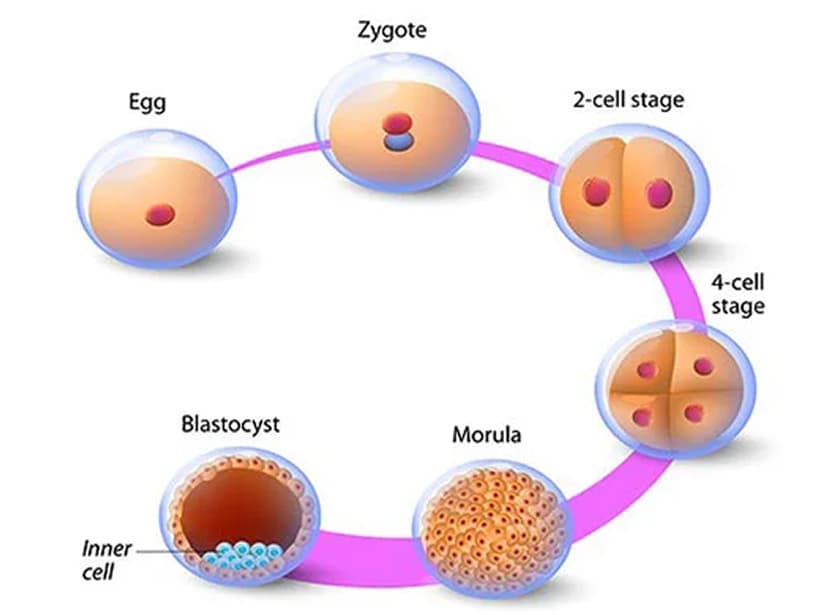
How Natural Cycle IVF Works — Step by Step
Step 1: Cycle Monitoring (Days 5–8)
Instead of daily injections, the process begins with simple monitoring. Around days 5 to 8 of your menstrual cycle, you visit the clinic for an ultrasound and blood test. The specialist tracks the growth of the one dominant follicle to time the retrieval accurately.
Step 2: The Trigger Shot
Once the follicle reaches the ideal size — usually 16 to 18 mm — a small trigger injection of HCG is given to precisely time the final maturation of the egg. This ensures the egg can be retrieved just before natural ovulation would occur.
Step 3: Egg Retrieval
The retrieval is a brief 5 to 10 minute procedure performed under light sedation. Because only one follicle is involved, recovery is significantly faster and more comfortable than in conventional IVF. Most patients return to their normal routine the following day.
Step 4: Fertilisation in the Lab
The retrieved egg is fertilised with the partner’s or donor’s sperm in the laboratory — usually via ICSI (Intracytoplasmic Sperm Injection) to maximise fertilisation success. Once the embryo reaches the proper stage of development, it is transferred into the uterus in a simple, painless procedure.
Who is a Good Candidate for Natural Cycle IVF?
Natural Cycle IVF is not suitable for everyone, but for specific groups it offers genuine advantages over conventional treatment:
- Women with low ovarian reserve (low AMH) — High-dose stimulation drugs may fail to produce multiple eggs anyway. Retrieving the one natural egg is often more effective than spending heavily on drugs that provide no additional benefit.
- Poor responders to fertility medications — Some women simply do not respond well to stimulation. Natural Cycle avoids the frustration of cancelled conventional cycles.
- Women wanting to avoid hormonal side effects — Bloating, mood swings, and OHSS risk are eliminated entirely.
- Couples with ethical or religious concerns — Natural Cycle IVF typically produces only one embryo, avoiding the question of what to do with surplus frozen embryos.
- Women who have had repeated conventional IVF failures — When multiple stimulated cycles have not worked, the natural approach offers a different strategy focused on embryo quality over quantity.
Natural Cycle IVF vs Mini IVF vs Conventional IVF
Feature | Natural Cycle IVF | Mini IVF | Conventional IVF |
Hormones used | None | Low dose oral/injectable | High dose injectable |
Eggs retrieved | 1 | 2–5 | 10–20 |
OHSS risk | None | Very low | Present |
Medication cost | Lowest | Moderate | Highest |
Physical side effects | Minimal | Mild | Significant |
Best suited for | Low reserve, poor responders | Moderate reserve | Young patients, good responders |
Cycles typically needed | 2–4 | 2–3 | Usually 1–2 |
Embryos created | 1 | 2–5 | Multiple |
Success Rates — What to Realistically Expect
Success rates per cycle for Natural Cycle IVF are lower than conventional IVF — typically 7 to 15% per retrieval attempt compared to 20 to 35% for conventional IVF in women under 35. However, this comparison can be misleading for two reasons:
First, the success rate per embryo transferred is often comparable, because the naturally selected egg tends to be of higher chromosomal quality than eggs produced under heavy stimulation.
Second, because the physical and financial cost per cycle is significantly lower, most patients complete 3 to 4 Natural Cycle attempts — and the cumulative success rate across multiple cycles is often comparable to one conventional IVF cycle for women with low ovarian reserve.
For women with good ovarian reserve who are strong responders to stimulation, conventional IVF remains the more efficient choice per attempt.
Key Advantages of Natural Cycle IVF
No risk of OHSS — Ovarian Hyperstimulation Syndrome is a potentially serious complication of conventional IVF caused by the body’s reaction to high-dose hormones. Natural Cycle IVF eliminates this risk entirely.
Lower cost — Fertility medications can account for 30 to 50% of the total cost of a conventional IVF cycle. Natural Cycle IVF virtually eliminates this expense, making multiple attempts more financially accessible.
Emotionally sustainable — Fewer clinic visits, no daily injections, and no dramatic hormonal shifts make the process significantly less disruptive to daily life and emotional wellbeing.
No surplus embryos — For couples who have concerns about creating and storing multiple embryos, Natural Cycle IVF produces only what the body naturally offers.
Risks and Limitations
The primary risk of Natural Cycle IVF is cycle cancellation. The single follicle may be empty at retrieval, the egg may not fertilise, or premature ovulation may occur before retrieval can happen. Cancellation rates are higher than in conventional IVF simply because there is only one egg to work with.
Close monitoring throughout the cycle significantly reduces this risk. And because the cost and physical toll per cycle is lower, most patients find that completing 3 to 4 natural cycles is still more manageable — both financially and physically — than one aggressive conventional cycle.
Frequently Asked Questions (FAQs)
1. Is Natural Cycle IVF as successful as conventional IVF?
The success rate per cycle is generally lower because only one egg is retrieved. However, the success rate per embryo is often comparable because that single egg is typically of high quality. For women with low ovarian reserve, the cumulative success rate over a few natural cycles often equals or exceeds conventional IVF.
Does Natural Cycle IVF hurt?
No. The monitoring involves standard ultrasounds. The egg retrieval is a minor procedure usually performed under light sedation or local anaesthesia. Because there is no ovarian swelling from drugs, the post-procedure period is significantly more comfortable than traditional IVF.
Can I do Natural Cycle IVF if I have irregular periods?
It is more challenging but not impossible. If you have irregular cycles, your doctor might use a “Modified Natural Cycle,” where very low doses of medication are used just to help regulate the timing of your natural ovulation, making the process more predictable.
What is the difference between Natural Cycle and Mini-IVF?
Natural Cycle IVF uses no stimulation drugs at all to grow eggs. Mini-IVF (Minimal Stimulation) uses low doses of oral medications or injections to encourage the growth of 2 to 5 eggs. Both are considered “low-intensity” options compared to conventional IVF.
How many times can I try Natural Cycle IVF?
Because the physical strain on the body is minimal and there is no risk of OHSS, Natural Cycle IVF can be performed in back-to-back months. Many couples choose to try 3 to 4 cycles to maximise their chances of success without needing a “rest” period between attempts.
Natural Cycle IVF offers a compassionate, science-backed alternative for those who find traditional methods too invasive or ineffective. By working with your body’s natural rhythm, you reduce physical stress and financial burden while focusing on the singular goal: a healthy pregnancy. At Rishitha Hospital, we believe in empowering you with choices that align with your health values. Your path to parenthood doesn’t have to be a battle; it can be a natural progression.
Final Thoughts
Natural Cycle IVF is not the right choice for every patient — but for the right candidate, it offers a genuinely compelling combination of lower cost, minimal side effects, and embryo quality focus. Women with low ovarian reserve, poor responders to stimulation, and those who want a gentler approach to fertility treatment deserve to know this option exists.
If you are exploring fertility treatment options in Hyderabad, or have already been told your AMH is low or that you responded poorly to conventional IVF, speak with our reproductive medicine team at Rishitha Hospitals. You can also read our guide on PCOD vs PCOS to understand how hormonal conditions affect fertility treatment choices.
Medical Disclaimer: This content is for general informational purposes only and is not a substitute for professional medical advice, diagnosis, or treatment. Suitability for Natural Cycle IVF depends on individual fertility factors and must be assessed by a qualified fertility specialist. Never disregard professional medical advice or delay seeking treatment based on information read here. For a personalized evaluation of your fertility options, please consult Rishitha Hospitals directly.